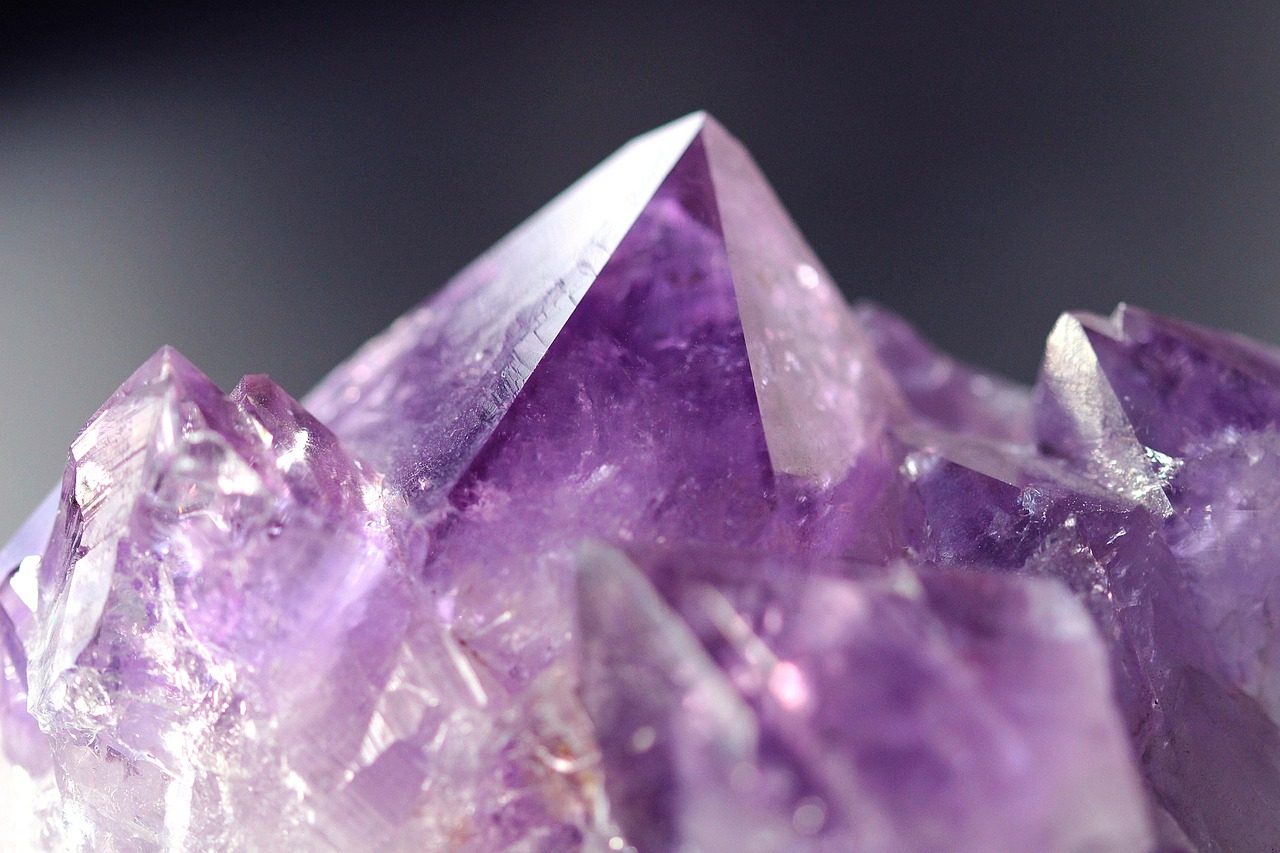
There is a word that appears on more jewellery labels than any other, and it means at least four different things depending on who printed it. Crystal.
A mineralogist means an ordered atomic lattice. A gemmologist means a stone cut from one. A glassware manufacturer means a glass with lead or barium in it. A costume jewellery brand means machine-cut glass beads, usually lead-free now, glued or claw-set into a base metal frame. And a shop assistant, quite reasonably, means "the sparkly one that is not a diamond".
None of those usages is wrong. That is the problem. The word describes a structure, a material and a category simultaneously, and the trade has never bothered to separate them because the ambiguity sells.
This guide does the separating. It covers what quartz actually is and why it is one of the most durable stones you can wear, which treatments you are entitled to be told about before you pay, how to tell quartz from glass without a laboratory, and where the price differences between two stones with the same name come from. It is long because the answer is genuinely layered, and because the alternative — a one-line definition — is what got us here.
A crystal is a structure, not a substance
The mineralogical definition has nothing to do with what a thing is made of. A crystal is a solid in which the atoms are arranged in a repeating three-dimensional pattern, extending over a distance large enough to be visible. The pattern is called a lattice, and it is what gives a crystal its flat faces, its straight edges and its cleavage directions when it has any.
Ice is a crystal. Table salt is a crystal. So is sugar, and so is the magnetite in beach sand. None of them are gemstones, and none of them would be sold as one.
The useful consequence is that almost every gemstone is crystalline. Diamond is carbon in a cubic lattice. Sapphire and ruby are corundum, trigonal. Garnet is cubic. Emerald is beryl, hexagonal. The exceptions are few and famous: opal is not crystalline at all but a stack of silica spheres, which is why its play of colour behaves nothing like a facet; amber is fossilised resin; pearl is layered aragonite held together by protein.
So "is crystal a gemstone" is the wrong question, and the reason it keeps getting asked is that the trade uses the word to mean a particular crystal — quartz — and then, separately, to mean a glass that imitates one.
Two words, one spelling, two entirely different products. Everything else in this article follows from that.
Quartz: what "crystal" usually means
Quartz is silicon dioxide, SiO₂, and after feldspar it is the most common mineral in the earth's crust. It crystallises in the trigonal system, which is why a good rock crystal specimen is a six-sided prism capped with six-sided pyramids — the shape most people draw when asked to draw a crystal, and the shape most people have never actually held.
The numbers that matter for jewellery:
| Property |
Value |
Why it matters |
| Chemical formula |
SiO₂ |
Simple, stable, unreactive to almost everything a household contains |
| Crystal system |
Trigonal |
Gives the prismatic habit and the six-sided points |
| Mohs hardness |
7 |
Harder than glass (5.5) and steel (5.5–6.5); softer than topaz and corundum |
| Cleavage |
None |
It breaks conchoidally, like glass, rather than splitting on a plane |
| Specific gravity |
2.65 |
Noticeably lighter than corundum at 4.0 or zircon at 4.6 |
| Refractive index |
1.544–1.553 |
Close to crown glass, which is why a refractometer alone is not decisive |
| Birefringence |
0.009 |
Low but measurable; a loupe can sometimes show doubling on facet edges |
That fourth row is the one that decides whether a stone survives being worn. Hardness seven is respectable but not exceptional — topaz, corundum, chrysoberyl, spinel and diamond all beat it. What quartz has that emerald does not is the absence of cleavage. Emerald is harder than quartz on paper and far more likely to split, because beryl has a perfect basal cleavage and a single knock along the wrong plane ends the stone.
Quartz has no such plane. Hit it hard enough and it fractures in a shell-shaped pattern with no preferred direction, which is exactly how glass breaks and exactly why quartz survives the sort of knocks a ring takes. We covered the general principle in our gemstone hardness guide, where the point is that hardness measures scratching and nothing else. Quartz is the clearest illustration of that gap: it is not a hard stone, and it is a tough one.
The trade-off is thermal. Quartz expands when heated and contracts when cooled, and a rapid change of either kind — a hot pan, a cold windowsill in January — can produce a crack that starts at an inclusion. It is not fragile in the way emerald is fragile, but it is not indestructible either, and most of the quartz we see with damage has thermal cracking rather than impact damage.
The two quartzes: macrocrystalline and microcrystalline
Here is where most guides stop and where the buying decisions actually live. Quartz comes in two forms, and they behave so differently that jewellers treat them as separate families.
Macrocrystalline quartz has crystals large enough to see. This is the family that gets faceted: rock crystal (colourless), amethyst (violet), citrine (yellow to orange), smoky quartz (brown to grey), rose quartz (pink, usually massive rather than in distinct crystals), and prasiolite (pale green).
Microcrystalline quartz, also called chalcedony, has crystals too small to resolve without magnification. It does not facet, it is cut en cabochon or carved, and the family includes agate (banded), carnelian (orange-red), chrysoprase (apple green, coloured by nickel), jasper (opaque, patterned), onyx (banded black and white), and bloodstone (green with red spots).
The practical difference is toughness and porosity. Chalcedony is marginally softer, around 6.5 to 7, but it is also tougher and it takes a high polish that holds. Agate and jasper are among the most forgiving stones in a jewellery box — they are the reason a Victorian brooch can be a hundred and thirty years old and still look new. Macrocrystalline quartz is more spectacular and more brittle, particularly when it is heavily included.
If you are choosing a stone to wear every day rather than to admire in a case, this distinction matters more than the Mohs number does.
Why quartz survives a ring finger
We are often asked whether quartz is "good enough" for an engagement ring. The honest answer is that it depends which quartz, in which setting, on whose hand — and that the answer is more favourable than the trade's habit of steering everyone to diamond would suggest.
Three things make quartz workable in daily wear.
First, no cleavage, as above. A quartz ring that gets knocked will chip at the girdle, and a chip on quartz can be repolished. A chip on emerald can propagate.
Second, the material is cheap enough to replace. This sounds like a concession and is actually a design advantage. A stone you can afford to lose is a stone you can wear without anxiety, and a stone worn without anxiety gets worn. A five-carat amethyst of decent colour costs a fraction of a one-carat diamond of indifferent colour, and it looks like a five-carat stone rather than a one-carat one.
Third, quartz takes a good polish and holds it. It has no cleavage to trap polishing compound and no porosity to stain, so a repolish after ten years is a bench job rather than a restoration.
What quartz will not do is stay pristine. It scratches at seven on Mohs, which means it will pick up fine abrasion from a stone wall, a car door, a granite worktop, and eventually from the fabric of a pocket over decades. That abrasion shows up first on facet edges and on the table, as a dulling rather than a scratch you can point to. A quartz worn daily for twenty years will look older than a sapphire worn daily for twenty years, and that is the honest trade.
A bezel setting removes most of the risk. The girdle — the thin edge where the crown meets the pavilion, and where nearly all chips start — sits inside metal rather than protruding. On a quartz ring we would take a bezel over four claws every time, and we would take a slightly thicker girdle over a thin one, even though the thin one looks better under a loupe.
Colour is usually a treatment, and you are entitled to know
Quartz is one of the most heavily treated families in the trade, and disclosure is inconsistent enough that it is worth knowing the specific cases rather than the general rule.
The general rule first. In the United States, the FTC's Guides for the Jewelry, Precious Metals and Pewter Industries require disclosure of any treatment that is not permanent, or that significantly affects value. In the EU, the approach runs through consumer protection law rather than a jewellery-specific rule, with the same practical effect: a seller who knows a stone has been treated and does not say so is on weak ground. Neither regime requires disclosure of routine, permanent, value-neutral treatment, which is where the arguments start.
Amethyst is generally sold untreated. Its colour comes from iron impurities combined with natural irradiation over geological time, and it is stable. Prolonged exposure to strong sunlight is widely reported to fade it, and while the effect is slow, we would not put a deep amethyst in a south-facing window as a permanent display piece.
Citrine is the awkward one. Most commercial citrine is amethyst that has been heated to somewhere above 450°C, which shifts the colour centre from violet to yellow-orange. Natural citrine exists and is rare, usually paler, and usually carries a premium. Heating amethyst is routine, permanent and — in most jurisdictions — not required to be disclosed, because it is considered an accepted trade practice rather than an enhancement. If the difference between natural and heated citrine matters to you, ask directly and expect the answer to be "heated" for anything under a few hundred dollars.
Prasiolite, the pale green quartz, is almost always heat-treated amethyst. Natural prasiolite is rare enough that most jewellers will never handle a piece.
Smoky quartz gets its colour from natural irradiation of aluminium-bearing quartz. It can also be produced artificially by irradiating colourless quartz, which is common and rarely disclosed. The result is visually identical, and the treatment is permanent.
Rose quartz is usually untreated, though dyeing is common on beads and on heavily fractured material. Its colour is generally attributed to trace titanium and iron, and it is famously light-stable compared with amethyst. Star rose quartz, with a six-rayed asterism, owes that effect to fine rutile fibres and commands a real premium.
Coated quartz is the category to watch. "Aura quartz", "angel aura", "titanium quartz" and similar trade names describe clear quartz coated with a thin metallic film by vapour deposition. The colours are spectacular and entirely artificial. The coating is a surface layer, it abrades, and it cannot be repolished without removing it. It must be disclosed as a coating, and on a piece priced like a natural fancy-coloured stone it is the single most common misrepresentation we see.
Two trade names are not quartz at all. Opalite is opalescent glass. Cherry quartz is glass, usually coloured pink or red. Neither is dishonest if the seller says so, and both are regularly sold as stones.
The other thing called crystal: glass
Now the second meaning, and the one that causes the most confusion at the counter.
"Crystal glass" is a manufacturing term, not a mineral one. It describes glass with a high refractive index and high dispersion, achieved by adding lead oxide or, in modern lead-free formulations, barium oxide, potassium oxide or zinc oxide. The higher index makes it sparkle; the higher dispersion splits light into colour at the edges of facets, which is the effect people describe as fire.
The European Union defined the terms in Directive 69/493/EEC, and the thresholds are still the reference point for glassware:
| Term |
Minimum lead oxide |
| Crystal glass |
10% |
| Lead crystal |
24% |
| Full lead crystal |
30% |
Those thresholds apply to glassware sold in the EU. They do not govern jewellery, and no equivalent rule governs the word "crystal" on a jewellery tag, which is why a brand can call a lead-free glass bead "crystal" without any legal difficulty at all. It is a trade description, and it is accurate in the sense that the material is a glass with a crystalline-looking cut.
The relevant change in the last fifteen years is the removal of lead. Concern about lead leaching from food-contact glassware, plus restrictions in the EU and the US on lead in articles children might mouth, pushed the major producers to lead-free formulations. Swarovski moved its entire production to a lead-free composition in the early 2010s and markets it under a specific name. The optical consequence is a slightly lower refractive index, compensated by tighter cutting and better polishing. The practical consequence for a buyer is that a modern piece is not the same material as a 1970s piece, and the older one is not automatically better.
Glass imitating stone has a long and largely respectable history. Paste, or strass, was developed in the eighteenth century and is still made; a good paste stone cut in the nineteenth century can be a finer piece of work than a mediocre natural stone cut last year. What paste does not have is resale value as a stone, and it does not survive abrasion the way quartz does — glass is around 5.5 on Mohs, and a glass bead worn against skin will frost over within a few years, where quartz will still polish.
How to tell them apart without a lab
No single home test is decisive, and anyone who tells you otherwise is selling a gadget. But three observations together will get you to a confident answer most of the time.
Look for bubbles. Glass is made by melting, and melting traps air. Those traps are spherical, they are often in groups, and they sit anywhere in the body of the stone. Quartz forms from solution and its inclusions are not spherical air pockets: they are fluid-filled cavities, two-phase inclusions with a visible bubble inside a cavity, negative crystals with angular shapes, rutile needles, or colour banding that follows the growth of the crystal. A loupe at ten times is enough to tell the difference, and this is the single most useful test.
Look at the surface. Glass is usually moulded, so you may find a seam where the mould halves met, or a sprue mark. Quartz is cut on a lap and polished, so you find flat facets with sharp edges and, under a loupe, fine parallel polishing lines. Moulded glass has rounded facet edges, because the mould cannot produce a sharp one.
Feel it. Quartz conducts heat roughly six to ten times faster than ordinary glass. Held against the lip or the inside of the wrist, a quartz stone feels distinctly cold and then warms quickly. Glass feels less cold and warms more slowly. It is a real difference and it takes practice to trust, because ambient temperature dominates everything else.
A refractometer will separate them properly — quartz reads 1.544 to 1.553, ordinary crown glass around 1.52 — but the readings are close, and getting a clean one requires a polished flat surface and a contact liquid. This is a jeweller's test, not a kitchen one.
What will not work: scratching it with a knife. Both quartz and most glass will be scratched by hardened steel, so the test proves nothing. Nor will the "does it fog when you breathe on it" trick, which is folklore.
What crystal healing is, and why it does not change the buying decision
We get asked this often enough that it deserves a straight answer rather than a diplomatic one.
There is no evidence that quartz or any other stone produces measurable effects on human health through proximity. The claims made for specific stones — amethyst for sleep, rose quartz for relationships, clear quartz for "amplification" — are not supported by controlled study, and the mechanisms proposed for them do not correspond to anything in physics.
That is not a reason to avoid a stone you find beautiful, and we are not going to write a guide that scolds you for liking what you like. The point is narrower: a claim about energy is not a specification, and it should not change what you pay. A piece of quartz does not become more effective at anything because it was sold with a card explaining which chakra it opens. It does become more expensive, often by a wide margin, and that premium buys a card.
Where the metaphysical framing does real commercial damage is in the bead market. A strand of amethyst beads sold as a "healing set" can cost three or four times what the same strand costs from a bead supplier, with the difference going entirely to packaging and language. If you want beads, buy beads. If you want a cut stone, buy a cut stone. Judge both on colour, clarity, cut and size, which are the four things that are actually there.
What quartz actually costs
Prices move, and the ranges below are order-of-magnitude rather than quotes. But the structure of quartz pricing is stable and worth understanding, because it is the clearest example in the trade of the same material selling at a fiftyfold spread.
Beads. Amethyst, rose quartz and clear quartz are sold by the strand, and a strand of 8mm rounds is a commodity. Price is driven by colour saturation and by how much of the strand is clean. Pale, included material is cheap; deep, even colour across a whole strand is not.
Commercial faceted stones. A two- to five-carat faceted amethyst of ordinary colour is an inexpensive stone, and it should be. There is no shortage of the material, the cutting is done in volume, and the colour is what most of the market buys.
Fine faceted stones. Here the price stops being about the material and starts being about the stone. Deep violet with red flashes that survives daylight, no visible inclusions at ten times, a cut with no window and no excessive bow-tie, over ten carats. That combination is genuinely uncommon, and it is priced as a coloured stone rather than as quartz.
Carving and specimen material. Large clean blocks suitable for carving are a separate market with its own logic, closer to sculpture than to jewellery.
The thing to notice is that "amethyst" tells you almost nothing about price. It tells you the species. Everything that determines what the stone is worth — colour, clarity, cut, size — is a separate question, and a tag that says only the species is a tag that has told you nothing.
Care that matters
Quartz is low-maintenance, with four exceptions worth knowing.
Thermal shock. Do not move a quartz piece between temperature extremes. No hot water on a cold stone, no freezer, no dishwasher. Most quartz damage we see is thermal cracking rather than impact.
Ultrasonic cleaners. Safe for clean, untreated quartz in a sound setting. Not safe for dyed material, not safe for coated material such as aura quartz, and not safe for anything with a glued or foiled component. If you are unsure which you have, use warm water and a soft brush.
Abrasion. Store quartz separately from softer stones and from other quartz, because seven scratches seven. A fabric pouch per piece is the whole solution.
Sunlight. Amethyst and rose quartz are both reported to fade with prolonged strong sunlight. It is slow, and it is not a reason to keep a ring in a drawer, but a display piece does not belong in a south-facing window.
Full method, including what to do about a chipped girdle, is in our jewellery cleaning guide.
The short version
Crystal is a structure, not a material. Almost every gemstone is crystalline; the word only became confusing because the trade applied it to quartz and then, separately, to a glass made to look like quartz.
Quartz is silicon dioxide, hardness seven, no cleavage, tough rather than hard, and one of the most practical stones you can put in a ring if you accept that it will dull before it breaks. Its colour is often a treatment, and the treatments that must be disclosed are the ones that are not permanent or that affect value — heating, irradiation, dyeing and coating.
Crystal glass is a different product with a different history. It is glass with a high refractive index, made with lead historically and without it now, and it is sold as crystal because the word is unregulated on a jewellery tag. It sparkles well, it does not survive abrasion, and it has no resale value as a stone.
Two stones with the same name on the tag can differ in price by a factor of fifty. The difference is never the name. It is colour, clarity, cut and size, in that order, and all four are visible if you know where to look.
If you are weighing quartz against a man-made alternative, our guide to what Swarovski crystal actually is covers the glass side of that comparison in detail. If you are choosing between quartz and a harder stone for a ring you intend to wear every day, start with the hardness and wearability guide — the answer is more about cleavage than about the number.